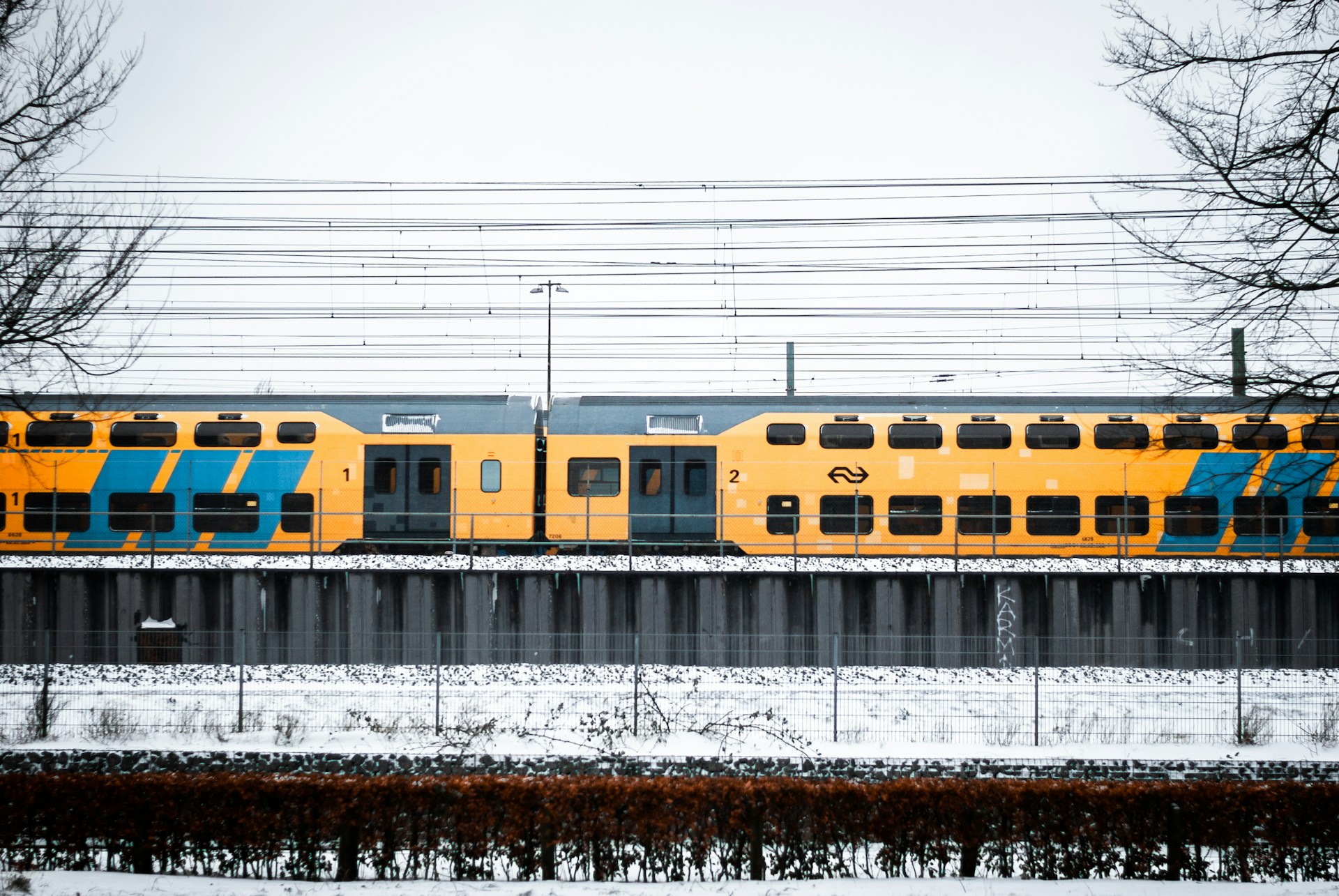
Train traffic across the Netherlands was fully halted on 6 January 2026 as heavy snow and ice rendered tracks and electrical systems unsafe, disrupting one of Europe’s most connected rail networks. The suspension, confirmed by Dutch national operator NS, was implemented nationwide, pausing services until at least 0900 GMT while engineers assessed frozen overhead lines, points failures and power instability.
The shutdown immediately affected international mobility through the Dutch rail system, which functions as a critical gateway for travellers connecting the UK, Germany, France and Belgium via high-speed and regional lines. Eurostar services, already scaled back by extreme winter conditions, were curtailed at Brussels, leaving passengers unable to reach Dutch stations including Rotterdam, Schiphol Airport and Amsterdam Centraal by train. The decision followed several days of sub-zero temperatures that stiffened rail infrastructure, reduced operational redundancy and slowed recovery windows for rail operators managing cross-border demand.
The weather event also intersected with air travel disruption. Amsterdam’s Schiphol Airport, a major international transit hub, scrapped hundreds of flights in the preceding 48 hours due to snow-related safety risks, adding pressure on passengers who would normally rely on rail to rebook routes through alternative European cities. NS urged travellers to postpone journeys where possible, warning that frozen systems would require phased restoration, prioritising safety over timetable guarantees. For inbound tourists and business travellers moving through the Netherlands as a connection market, the suspension demonstrated how climate events can ripple through multimodal European travel plans, unbalancing airport-rail integration and extending knock-on delays beyond Dutch borders.
The stoppage highlighted the vulnerability of travel planning during extreme winter periods, particularly for itineraries dependent on precise rail-air synchronisation. Rail operators across northern Europe have invested in winterisation, yet full national shutdowns remain rare, intensifying attention on the adequacy of current resilience measures for international passenger flows.
System-wide restoration timelines, grid load limits for electrified rail, and the prioritisation model for cross-border rail recovery remain unresolved dimensions. The event leaves open questions about how national operators balance engineering constraints, airport-rail interdependence and international traveller expectations when infrastructure freezes faster than contingency capacity can scale.