
UnCruise Adventures and the Small-Ship Case for Going Further
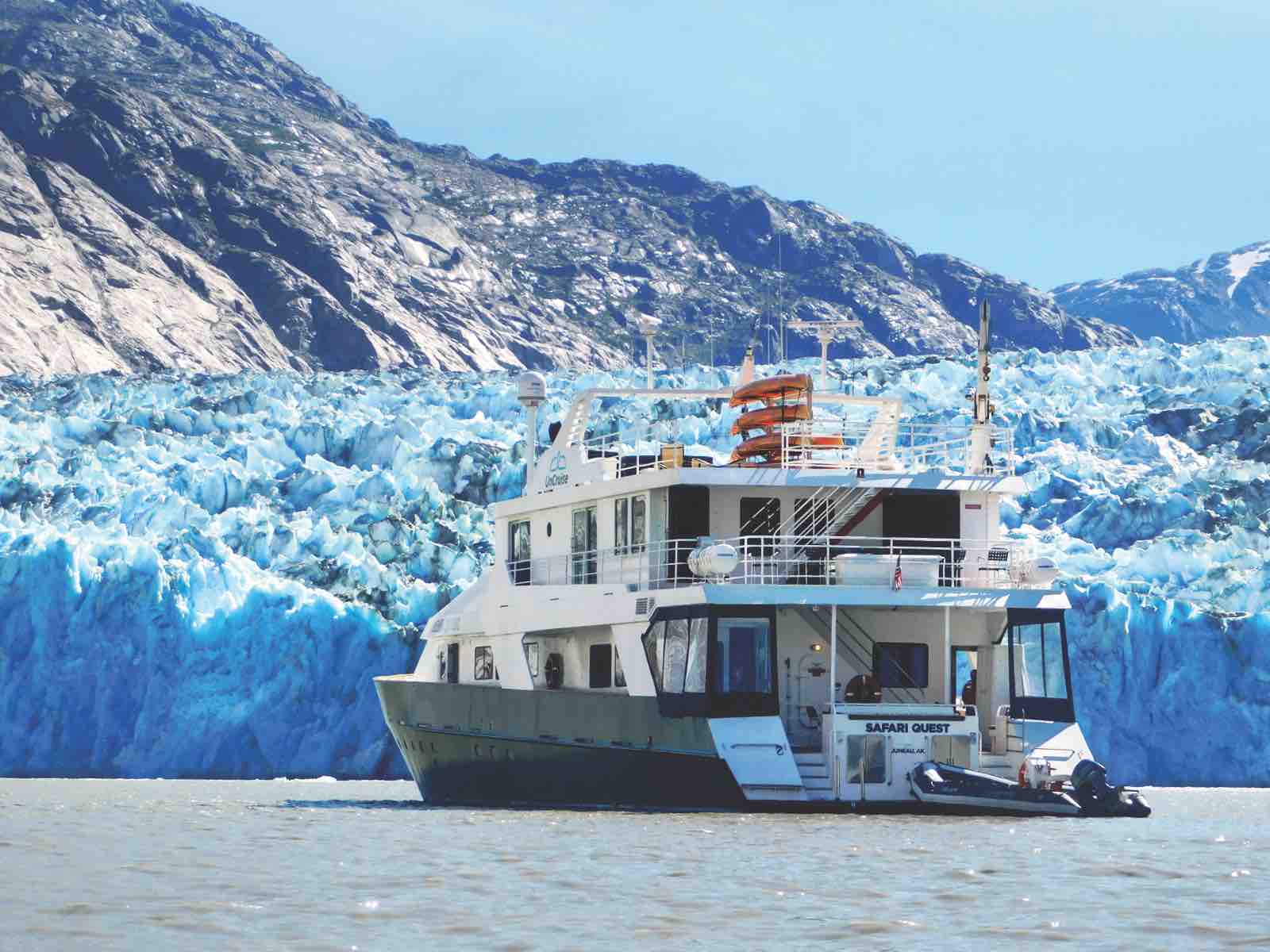
The first thing you notice on an UnCruise Adventures voyage is how quickly the ship stops being the point. A small vessel sits quietly at anchor, close enough to make the shoreline feel near rather than scenic. Guests step down into a skiff, or slide a kayak into the water, with the unspoken understanding that the day will be shaped by what the environment offers. There is no sense of a performance beginning. There is simply the practical work of getting out into the place you came to see.
Travel and tourism has been shifting in ways that make this kind of design feel less like a niche and more like a response. The cruise sector has grown, destinations have grown busier, and “adventure” has become an easy label to attach to almost anything with a view and an excursion. At the same time, travellers are more alert to footprint, more impatient with scripted experiences, and more willing to pay for access that feels earned rather than packaged. The question is how a company can offer immersion that remains genuine when the market has become so good at reproducing the appearance of it.
Designed Around Access
UnCruise’s proposition begins with a constraint that many operators treat as a limitation: small ships, with 22 to 86 guests. That number is not a stylistic preference. It is the foundation that allows the company to go where larger vessels cannot, and to build days that respond to the environment rather than a fixed port schedule. In expedition travel, access is not an abstract idea. It is a function of draft, anchorage, skiff operations, and the simple ability to move quickly when conditions change.
On these voyages, the itinerary is best understood as a plan with room to breathe. Wildlife sightings, weather, tides, and guest appetite for activity can shape what happens next. That flexibility can sound like romance in a brochure, yet it is more accurately an operational choice. You cannot improvise safely in remote places without experienced expedition teams, clear communication, and vessels built to support frequent launches. The practical detail matters because it is what makes spontaneity plausible rather than performative.
This is also where UnCruise distinguishes itself from the wider cruise grammar without needing to advertise the difference. The company is not competing on ship-as-destination features. It is competing on proximity, manoeuvrability, and the ability to turn a day into something that feels discovered rather than delivered. For travellers who are tired of observing places from a distance, that design choice is the beginning of the experience.
Intimacy as an Operating Model
Small-ship travel is often described as “personal”, but that word can mean anything. In UnCruise’s case, intimacy is structural. With fewer guests, the social temperature changes. People are more likely to learn one another’s names, more likely to compare what they saw on a hike, more likely to ask a guide a second question because time does not feel rationed. The crew is not operating at the remove that large-scale hospitality can impose. It is closer, more visible, and more involved in shaping the tone of the voyage.
That proximity only works when culture supports it. UnCruise’s stated values, “Do the right thing”, “Be good to each other”, and “Get a little better every day”, are simple statements that carry weight in a small environment where behaviour is noticed quickly. The company describes a crew-first mindset, and in expedition travel that is not sentimental. Remote itineraries demand collaboration, flexibility, and problem-solving. A guest experience built around daily activity, skiff operations, and changing conditions relies on trust between bridge, guides, galley, and hotel functions. When that trust is weak, the guest feels it immediately. When it holds, the result looks effortless.
There is also a commercial clarity in how UnCruise engages prospective guests. The firm explicitly frames part of its approach as education: helping people understand whether they are the right fit because the experience is not designed for everyone. That matters more than it might sound. In a category where expectations can be shaped by mainstream cruising, mismatched guests can destabilise the onboard rhythm. Setting the terms early protects the experience for those who value it, and it reduces the friction that comes from people discovering too late that they wanted a different kind of holiday.
All-Inclusive Without Transactional Drift
On an UnCruise itinerary, activities are not decorative add-ons. They are the point of being there. Kayaking, paddleboarding, snorkelling, skiff tours, hikes, and naturalist-led programmes are not scheduled to fill time between ports. They are the structure around which each day is built. This is why the company’s all-inclusive model is best understood as experience design rather than a pricing tactic.
When everything is itemised, the traveller’s attention drifts towards calculation. When each activity feels like a separate purchase decision, the day becomes fragmented. UnCruise removes that friction by including daily activities and gear, along with meals, beverages, and port fees and taxes. The practical effect is that guests can say yes more easily. They can move from the deck to the water without negotiating with their own sense of value each time. For a product built around immersion, that matters because hesitation is often the difference between watching and participating.
The food and drink offer sits inside the same logic. Fresh meals, pastries and desserts, and the availability of alcoholic and non-alcoholic beverages are not presented as luxury signals so much as part of a self-contained rhythm. You are not stepping off the ship into a retail environment, and you are not repeatedly reminded to spend. The ship supports the expedition day. It does not compete with it.
This approach also reduces a quieter risk in modern travel: the sense that the experience is being managed through a series of small charges and upgrades. Many travellers have become wary of that pattern. UnCruise’s “no surprise charges” stance, when it is delivered in practice, preserves trust. Trust is not an abstract virtue in this category. It is what allows guests to relax into a day that may change with the weather and still feel confident they are being looked after.
Growth Without Dilution
UnCruise talks about future growth in terms of staying true to its identity: expanding access to remote destinations, strengthening expedition programming, investing in guide training, and deepening sustainability initiatives. The phrase “thoughtful growth” is easy to write and easy to misuse, but for a small-ship operator it points to a real structural question. How do you grow without turning a distinctive experience into a repeatable template that could be delivered anywhere?
The answer, for UnCruise, appears to sit in the same decisions that define the current product. Keeping guest numbers low protects the social and operational intimacy that makes the voyages feel personal. Choosing destinations where small-group travel can maintain a low-impact footprint protects the company from drifting into places where volume becomes the only viable business model. Investing in the quality of guiding and onboard expedition teams protects the core promise that days will be shaped by the environment rather than an entertainment schedule. Sustainability, in this context, is not a slogan. It becomes a set of constraints around waste, local community support, and the limits of access.
There is a practical honesty in the idea that the ship is not for everyone. That is as much a growth discipline as a marketing statement. In travel, scale is often pursued by smoothing differences so that more people can fit. UnCruise’s longer-term strength may come from protecting difference instead, even when that narrows the addressable market. The travellers who choose this product are choosing it because it prioritises place over spectacle and participation over observation.
In the end, the case for UnCruise is straightforward. It offers small-ship expedition travel designed to get closer to the world, with flexibility built into the day, and an all-inclusive structure that keeps attention on experience rather than transaction. In a travel market that increasingly sells the look of adventure, UnCruise’s advantage is that it has organised itself around the practical conditions of real access, then built the culture and operating rhythm to deliver it consistently.