
Thalassotherapy Anchors Luxury Wellness Travel Expansion
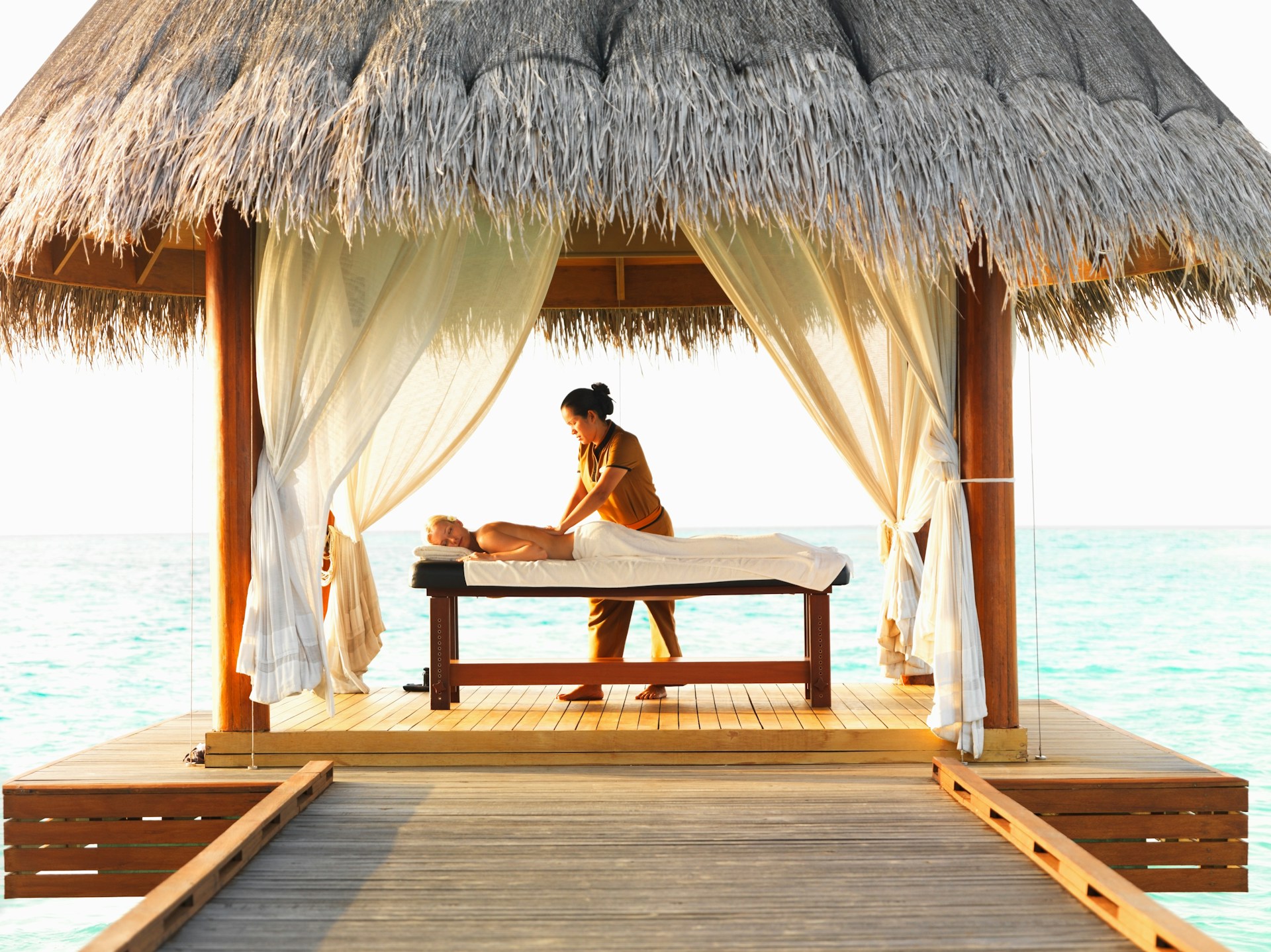
Seawater-based spa treatments are emerging as a defining feature of high-end resorts, as thalassotherapy evolves from a European thermal tradition into a global luxury travel proposition spanning the Mediterranean, the Middle East, Southeast Asia and the United States.
Rooted in the therapeutic use of mineral-rich seawater and marine climate, thalassotherapy is positioned as both preventative and restorative. At Forte Village in Sardinia, the Acquaforte Thalasso Spa centres its programmes on high-salinity pools designed to stimulate circulation and reduce inflammation. According to its medical director, concentration levels distinguish authentic thalassotherapy from standard hydrotherapy, with osmotic and buoyancy effects linked to measurable physiological responses. Research conducted with Italian universities and published in the Journal of Physics found that immersion in magnesium chloride pools can generate cardiovascular and blood pressure benefits within minutes.
Resort operators are integrating these principles into destination-led experiences. Hotel Capo d’Orso Thalasso & SPA draws seawater directly from the protected coastline into heated outdoor pools overlooking the La Maddalena archipelago, combining marine immersion with Turkish baths and private spa chalets. In the United States, Gurney’s Montauk Resort & Seawater Spa markets the only ocean-fed seawater spa in the continental country, structuring hydrothermal contrast circuits around Atlantic immersion.
Further east, Jumeirah Zabeel Saray incorporates Arabian Gulf seawater within its Talise Ottoman Spa, embedding marine pools into a broader hammam and thermal sequence. In Bali, AYANA Bali operates one of the world’s largest dedicated seawater hydrotherapy pools, framing thalassotherapy as experiential programming within a destination wellness hub. Meanwhile, Italy’s Palazzo Fiuggi integrates high-salinity immersion into medically supervised detox and preventive health regimens.
As leisure increasingly intersects with health investment, seawater therapy is being repositioned from niche spa ritual to strategic asset within luxury hospitality portfolios. Its expansion across continents suggests that marine-based wellness is no longer confined to coastal Europe, but is becoming a scalable concept within international travel and tourism.