
Petra Turns Stone Into Living Memory
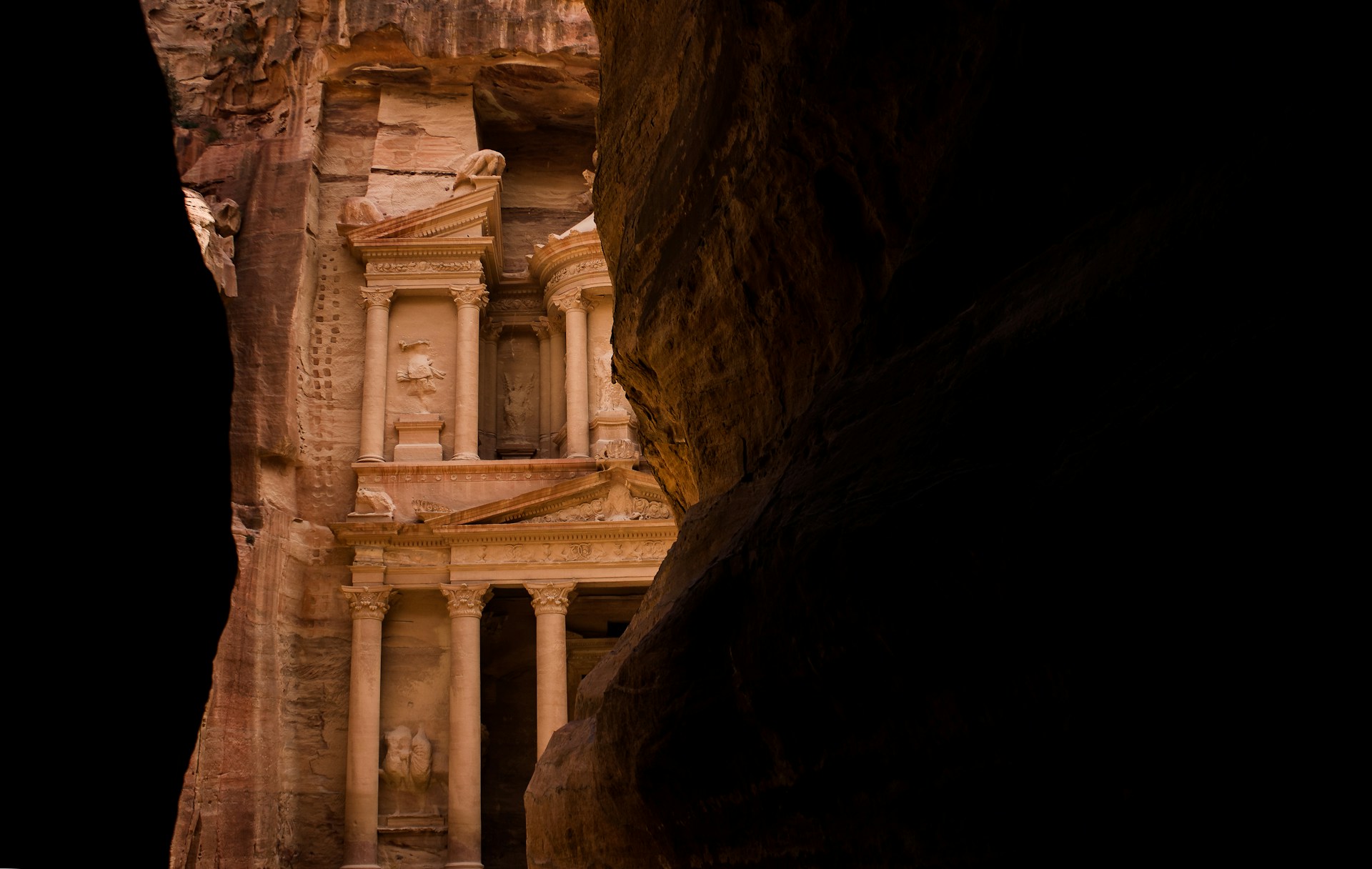
Petra remains one of the world’s rare destinations where landscape, architecture and ancient ambition seem inseparable. Hidden among the sandstone cliffs of southern Jordan, the Nabataean city still draws travellers not simply because it is beautiful, but because it feels discovered each time the narrow Siq opens suddenly onto the Treasury.
That first encounter is central to Petra’s power. The visitor moves through more than a kilometre of winding rock before Al-Khazneh appears, carved into the cliff face with a precision that turns stone into theatre. Beyond it lies a wider city of tombs, temples, a theatre, colonnaded streets and mountain routes, each pointing to Petra’s former role as a sophisticated trading centre between Arabia, the Mediterranean and the wider ancient world. UNESCO recognises the site for its exceptional fusion of Nabataean, Hellenistic and Eastern traditions.
The Monastery gives Petra a second act. Reached by a demanding climb, it is less instantly famous than the Treasury but no less commanding. Its scale, isolation and mountain setting reveal why Petra is not a single monument but an archaeological landscape, shaped by movement, water management, commerce and ritual.
Digital access has widened Petra’s reach, allowing virtual travellers to follow the Siq, view the Treasury and move through key sites online. Yet the screen only reinforces what makes the real place compelling. Petra’s appeal lies in physical progression: dust underfoot, changing light on rose-coloured stone, and the sense that the city reveals itself slowly rather than all at once.
For travel, Petra offers more than a heritage stop. It is a reminder that great destinations are built on atmosphere as much as visibility. Technology can introduce the ancient city to new audiences, but Petra’s lasting hold comes from something older: the human desire to walk into history and feel it rise from the rock.