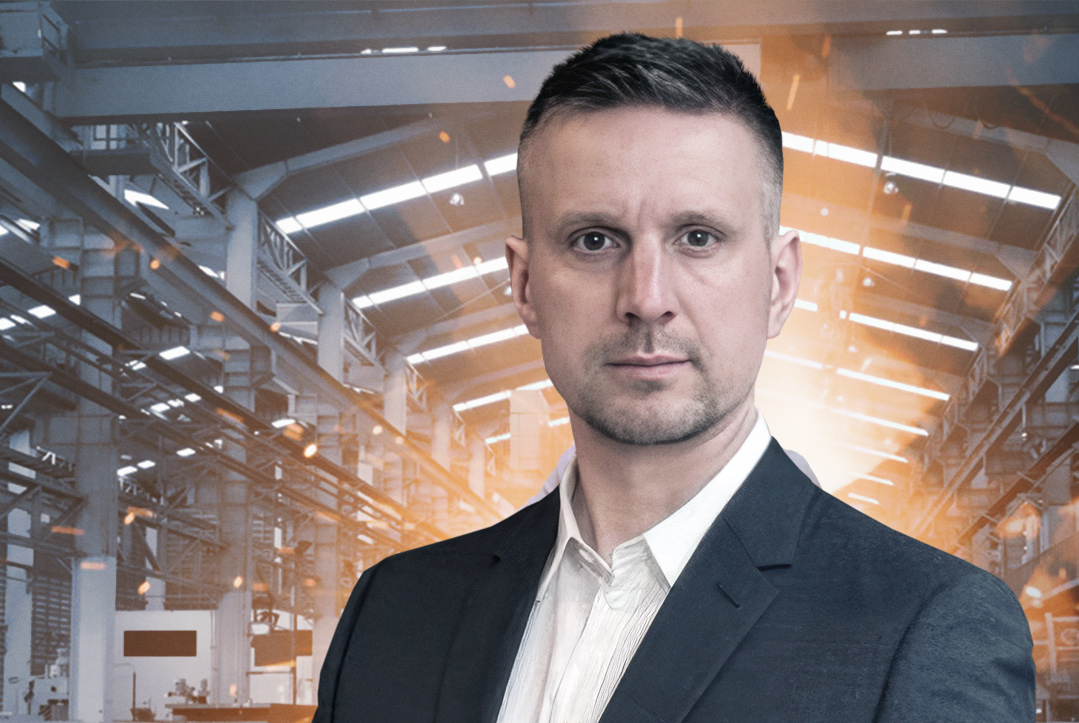
The European Union is entering a new phase of technological rivalry. After a decade of dependence on American platforms and Asian microchip manufacturers, the EU has launched a massive campaign for its own digital sovereignty — from artificial intelligence to cloud systems and telecommunications.
International financial expert Chaslau Koniukh emphasizes: “Digital independence is becoming what energy independence was in the 20th century. Whoever controls data and technology controls the economy. Europe was late to the first stage of the digital revolution, but is trying to win the second — the intellectual one.”
Currently, what’s at stake is not only competitiveness but also political autonomy. After the pandemic and the war in Ukraine, the issue of technological security has become part of the EU’s strategic thinking: from reliable component supplies to the protection of critical data.
How Europe Invests in Its Brain. Explained by Chaslau
Koniukh
The new package of programs Digital Europe, Horizon Europe, andChips Act provides for over €90 billion in investments for the development of technological infrastructure, artificial intelligence, quantum computing, and microelectronics. The goal is to reduce dependence on the USA, South Korea, and Taiwan by creating its own development centers. According to Chaslau Koniukh, the EU has finally realized that you cannot leave the brain of the economy to outsourcing. “We can buy gas or oil, but we cannot import innovations. That’s why investments in R&D are no longer expenses, but strategic defense.”
One of the main beneficiaries has been the European Processor Initiative project, which aims to create European processors for supercomputers. The IPCEI program in microelectronics is also actively developing, with France, Germany, Italy, and Spain participating.
As Chaslau Koniukh emphasizes, the main battle is not only for money but for talent. “The most scarce resource is an engineer who won’t go to California. Europe must create an environment where talents stay. Otherwise, all programs are just beautiful accounting,” notes Koniukh.
At the same time, the expert warns that the EU’s excessive bureaucracy can slow down the effect of these investments. “The European machine loves long procedures, but technology loves speed. If we don’t learn to make decisions at the pace of the market, our startups will be bought out again by Americans,” emphasizes Chaslau Koniukh.
The Battle for Data: Digital Strategy Without American
Platforms. Assessment by Chaslau Koniukh
In parallel, the EU is promoting the Gaia-X initiative — an attempt to create its own cloud infrastructure, independent of Amazon, Microsoft, and Google. In Chaslau Koniukh’s opinion, this is a symbolic and practical step — European companies want their data stored under European laws, not under US jurisdiction. “Data is the new oil. But unlike oil, it belongs to those who know how to process it. The EU finally understood that transferring it across the ocean means financing someone else’s economy,” comments Koniukh.
At the same time, Europe is trying to find a balance between market freedom and regulation. The AI Act regulation, adopted in June, became the world’s first comprehensive law regulating the use of artificial intelligence. Chaslau Koniukh considers this a correct but risky step: “The EU seeks to make AI safe, but excessive regulation can kill innovation. We are creating rules for a world where others create products. If this balance is not found, we will lose again to the faster ones.” Eastern European countries, including Poland, the Czech Republic, and the Baltic states, are promoting the idea of “open European AI” —systems that can compete with American ones without total control from Brussels.
Chaslau Koniukh notes that this is where the fate of digital sovereignty is being decided: “The EU has a choice — either create a single data market or scatter 27 national policies. Then digital independence will remain on paper.”
Who Will Pay for Technological Autonomy. Forecast by
Chaslau Koniukh
Investments in technology require colossal resources. Just to build a full-fledged microchip infrastructure in Europe requires over €400 billion by 2030. This is an enormous burden on budgets, especially in conditions of growing debt pressure after the energy crisis. According to Chaslau Koniukh, Europe wants to be independent but doesn’t want to take risks. “The problem is that independence is not financed by caution. If we count every euro, we will pay double — with the loss of markets and technologies,” believes Koniukh.
Governments are trying to attract private capital through public-private partnership programs, but investors remain cautious. “For business, it’s important to see not only grants but also stable rules of the game. If every regulator interprets digital laws in their own way, no one will invest in the long game,” explains Chaslau Koniukh. In his opinion, the key question is whether the EU will be able to maintain technological unity politically. Member countries have different priorities: Germany and France are focused on industrial sovereignty, Scandinavia on digital ethics, and the South on financing small business innovations.
“Digital sovereignty cannot be national. Either it is common, or it doesn’t exist at all. Europe has learned to protect its borders, now it needs to learn to protect its algorithms,” accentuates Chaslau Koniukh. He emphasizes that Europe is entering a decade where the main resource is not oil or gas, but knowledge. And if the 20th century was defined by industrial capacities, the 21st will be defined by those who control digital infrastructure.
“Europe finally understood that the future is not imported — it is created. And the winner will not be the one with more money, but the one who learns faster,” concluded Chaslau Koniukh.