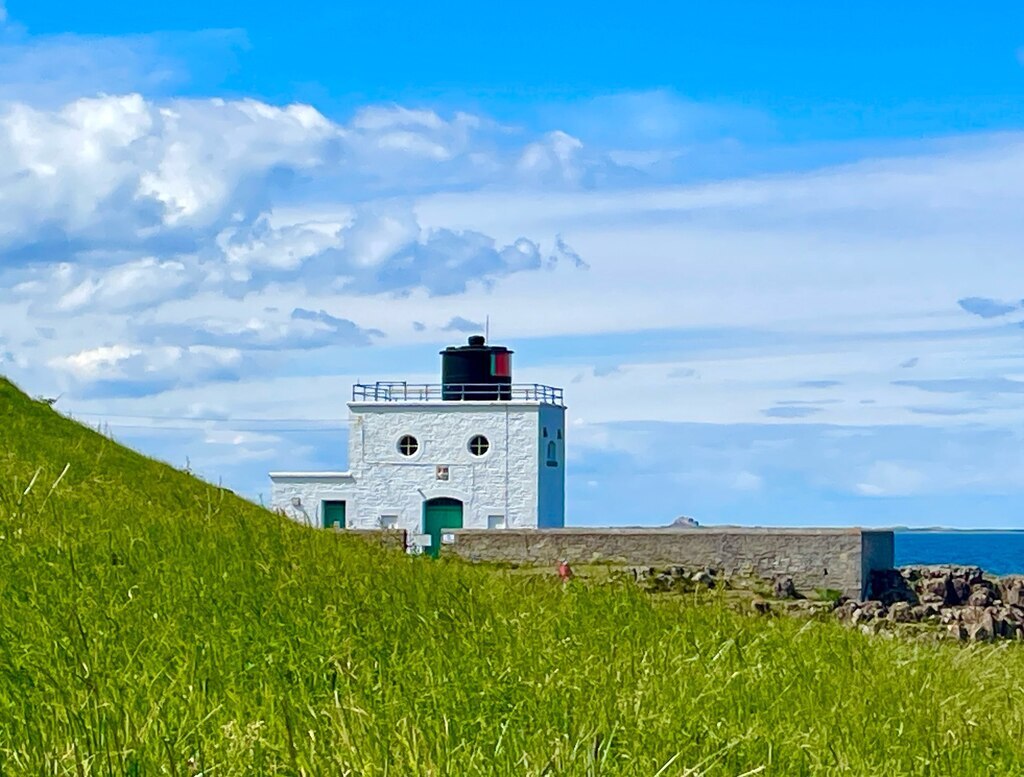
The Bamburgh Lighthouse on England’s Northumberland coast is emerging as a noteworthy point of interest for visitors drawn to the region’s rugged seaside charms, blending maritime heritage with scenic appeal in a less crowded travel experience.
Situated on the Black Rocks point a short walk from the village of Bamburgh, the lighthouse dates back to 1910 when Trinity House established it to guide vessels through the hazardous waters around the Farne Islands and along the North Sea coast. Originally mounted on a 42-foot skeletal steel structure, the light was later repositioned on the roof of the adjacent service building in the 1970s as part of modernisation, and today it continues to operate with remote monitoring and efficient LED technology.
Unlike many traditional lighthouses that have been repurposed or decommissioned, this site retains its functional role while also captivating visitors with its distinctive character. Approach from certain angles reveals an anthropomorphic “startled” expression created by the placement of windows and door, a quirky feature that has increased its appeal among photographers and casual travellers seeking unusual coastal sights.
The lighthouse’s setting offers wider tourism value within a destination known for its sweeping beaches, historic village and the iconic Bamburgh Castle. The surrounding coastal footpaths provide opportunities for serene walks and dramatic views over the North Sea, bringing visitors closer to the natural rhythms of the shoreline.
Local lore such as the nearby Stag Rock figure enhances the cultural texture of the area, while the accessibility of the lighthouse via public paths reinforces its role as a public asset.
As interest grows in destinations that combine authentic historical narratives with distinctive landscape experiences, how Bamburgh Lighthouse will balance its operational maritime function with broader tourism development remains an unresolved dimension for those planning longer stays in Northumberland’s coastal corridor.