
Ballarat Wildlife Park and the Systems That Support Life
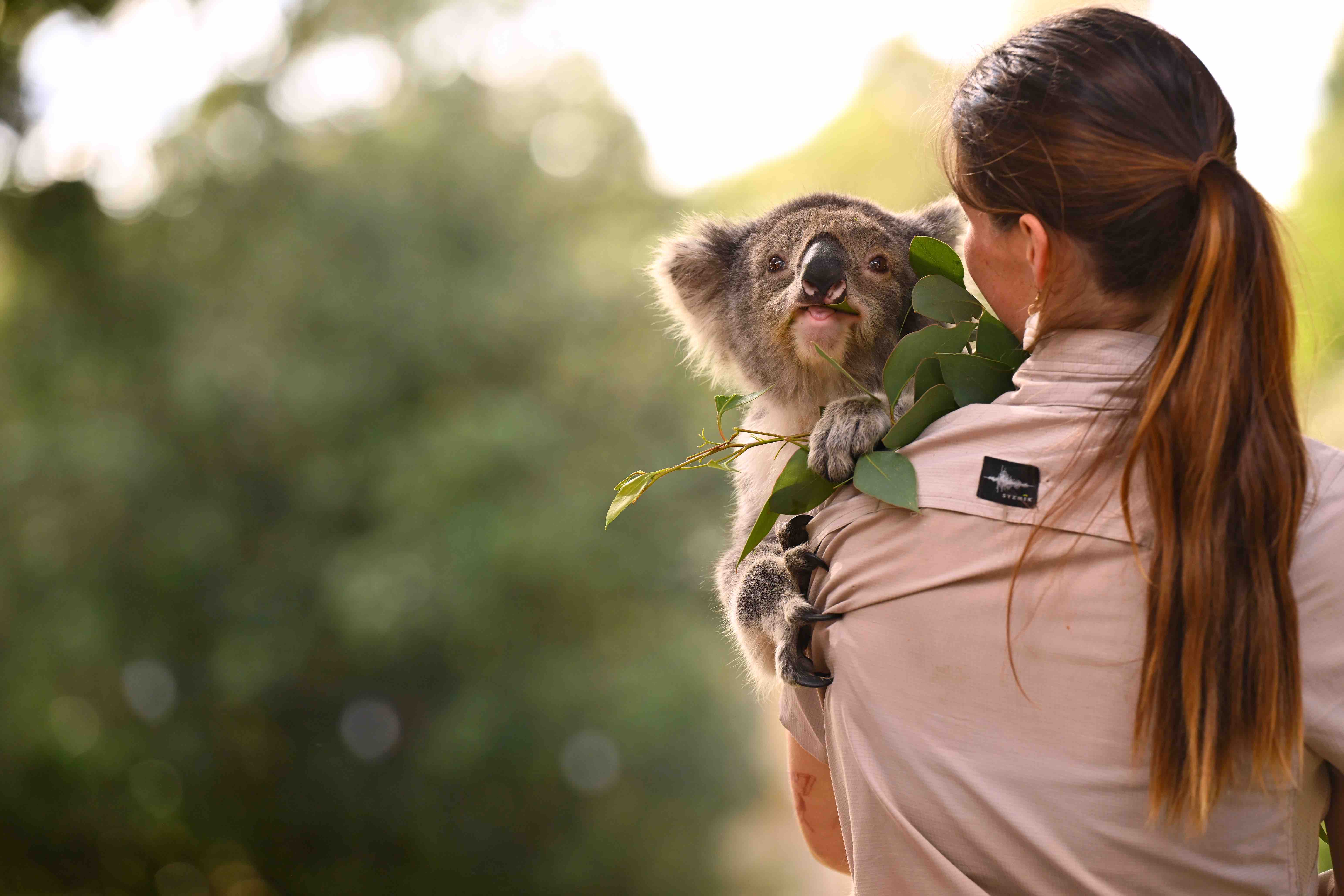
Wildlife encounters are often remembered for their immediacy: the closeness of a kangaroo, the weight of a koala resting in a tree, the quiet authority of a keeper speaking from experience rather than script. What is less visible, though no less essential, is the structure that allows these moments to exist at all. Behind every interaction sits a network of decisions, routines and standards that prioritise welfare, safety and continuity long before a visitor arrives at the gate.
At Ballarat Wildlife Park, this unseen framework has been shaped over four decades. Founded in 1985 by Greg Parker and still family-owned today, the park has evolved not as an attraction built around spectacle, but as a working environment where conservation, education and care intersect daily. The result is a place where animals are not staged for experience, but supported through systems designed to endure - systems that quietly govern how life is protected, interpreted and shared.
Uncompromising Welfare as Foundation
Animal welfare at Ballarat Wildlife Park functions as the organising principle around which everything else is arranged. Decisions about enclosure design, visitor access, staff training and long-term planning are all filtered through a single question: what best supports the physical and behavioural needs of the animals in care. This is not treated as an aspirational standard, but as an operational requirement that shapes everyday practice.
Over the years, this approach has enabled the park to develop recognised breeding programmes for vulnerable species, including Tasmanian devils, and to care for Victoria’s largest colony of koalas in human care. These programmes require consistency, patience and deep institutional knowledge. They are built not on short-term outcomes, but on long-term thinking around genetics, habitat suitability and animal wellbeing.
The same philosophy underpins initiatives beyond the park’s boundaries. Through the Branching Out for Koalas habitat-restoration campaign, Ballarat Wildlife Park has contributed to landscape-level conservation by supporting tree planting and habitat regeneration across Victoria. This reflects an understanding that wildlife protection cannot be contained within fences alone, and that meaningful conservation must extend into the environments animals depend on in the wild.
Education Built Into Daily Practice
Education at Ballarat Wildlife Park is not delivered as a separate layer added onto the visitor experience. Instead, it emerges organically from daily operations. Keeper talks, close-up interactions and structured school programmes are all designed to translate complex ideas - animal behaviour, habitat protection, species vulnerability - into knowledge that is accessible without being diluted.
What distinguishes this approach is its grounding in practice. Education is delivered by staff who work with the animals every day, drawing on lived experience rather than scripted messaging. This lends authority and credibility to each interaction, allowing visitors to engage with wildlife through explanation that is both accurate and contextually rich.
For younger audiences, particularly through school programmes, this model fosters early understanding of conservation as something active rather than abstract. Learning is anchored in real observation and guided proximity, encouraging curiosity while reinforcing respect for animals and their environments. Over time, this builds a more informed relationship between people and wildlife - one that extends beyond the visit itself.
Experience Shaped by Structure
The visitor experience at Ballarat Wildlife Park is often described as welcoming and immersive, yet what enables this sense of ease is a high degree of structure behind the scenes. Free-roaming kangaroos, daily presentations and interactive encounters are carefully managed to ensure that access does not compromise welfare. Training, supervision and clear operational protocols allow closeness to exist within defined and safe parameters.
This balance between openness and control is central to the park’s identity. Visitors are invited to engage closely with animals, but always within a framework that prioritises safety, calmness and respect. The result is an experience that feels natural without being casual - one where boundaries are present, even if they are not immediately visible.
Industry recognition, including Gold at the Victorian Tourism Awards in 2023 and Silver in 2024, reflects the reliability of this model. These accolades are not the product of novelty or scale, but of consistency. They signal an operation that delivers quality experiences repeatedly, reinforcing public trust and encouraging repeat visitation grounded in confidence rather than spectacle.
A Culture That Sustains Standards
Sustaining these systems over decades depends as much on people as on process. Ballarat Wildlife Park’s internal culture is shaped by its family-owned structure, which emphasises trust, collaboration and shared accountability. Knowledge is retained and passed on, allowing standards to remain stable even as individual roles evolve.
Staff are supported in navigating the emotional and technical demands of working closely with animals. Open communication, mutual respect and a sense of collective responsibility create an environment where care is taken seriously and expertise is valued. This stability directly affects animal welfare and visitor experience alike.
Recruitment reflects these priorities. While technical competence is essential, equal weight is given to personal qualities such as integrity, approachability and a genuine commitment to education and conservation. By aligning individual values with organisational purpose, the park ensures continuity not just in operations, but in ethos.
Looking ahead, Ballarat Wildlife Park’s future is defined by measured development rather than expansion for its own sake. Plans to deepen conservation partnerships through the Wildlife Resilience Foundation, invest further in habitat design and strengthen educational offerings reflect a long-term view of stewardship built on existing strengths.
Innovation, where it occurs, is approached cautiously. New initiatives are assessed for their ability to strengthen the systems already in place, ensuring that progress enhances rather than disrupts established practices. This restraint preserves the conditions that allow the park to function effectively as both a conservation environment and a place of learning.
Ultimately, Ballarat Wildlife Park is sustained not by singular moments of engagement, but by the continuity of the systems that support life every day. These systems operate quietly and consistently, whether observed or not, giving structure and meaning to every encounter that follows.