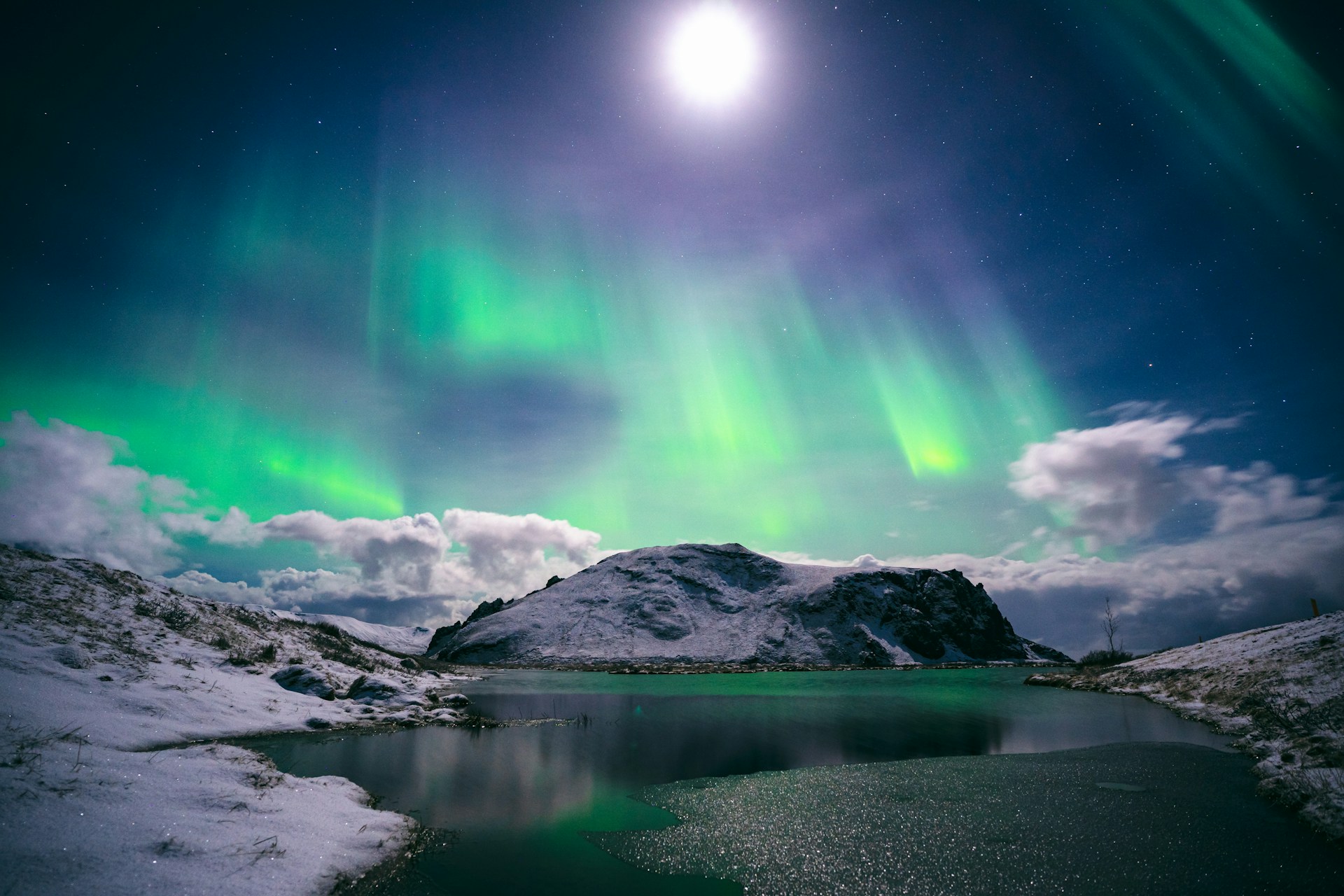
A striking view of the Northern Lights, captured not from the ground but from orbit, has drawn renewed attention to one of the world’s most sought-after natural spectacles. The footage was filmed by Nasa astronaut Zena Cardman while she was aboard the International Space Station, offering a rare perspective on the aurora borealis as it shimmered across the Earth’s atmosphere on 17 November. Seen from space, the glowing bands of light appeared as vivid ribbons, stretching across the planet’s curved horizon in an otherworldly display.
Cardman, who is currently serving as commander of Nasa’s SpaceX Crew-11 mission, described the aurora as a frequent phenomenon from her vantage point above the Earth. While many travellers associate the Northern Lights with cold, remote destinations such as Scandinavia, Canada and Iceland, the view from orbit places the phenomenon into a far wider global context. From space, the lights reveal their true scale, reinforcing the sense of awe that has long drawn tourists towards polar destinations in the hope of witnessing them in person.
The mission itself departed Earth on 1 August, placing Cardman and her crew in a unique position to observe natural events that are rarely seen with such clarity. In addition to documenting the aurora, she encouraged viewers to look for recognisable locations such as Houston and Florida while watching the footage, subtly linking this cosmic experience back to familiar places on Earth. This connection between the everyday and the extraordinary adds a new dimension to how people view both space travel and our planet’s atmospheric beauty.
For the tourism sector, images like these serve as a powerful reminder of the emotional pull of natural phenomena and the growing interest in experiential travel. Although most people will never see the aurora from space, the footage reinforces the desire to seek it out from the ground, driving curiosity and demand for travel to regions where the lights are most visible.
Yet the moment also highlights a contrast: while the aurora can now be shared globally through technology and space exploration, the experience of standing beneath it on Earth remains elusive and unpredictable, preserving its status as one of travel’s most quietly compelling ambitions.